
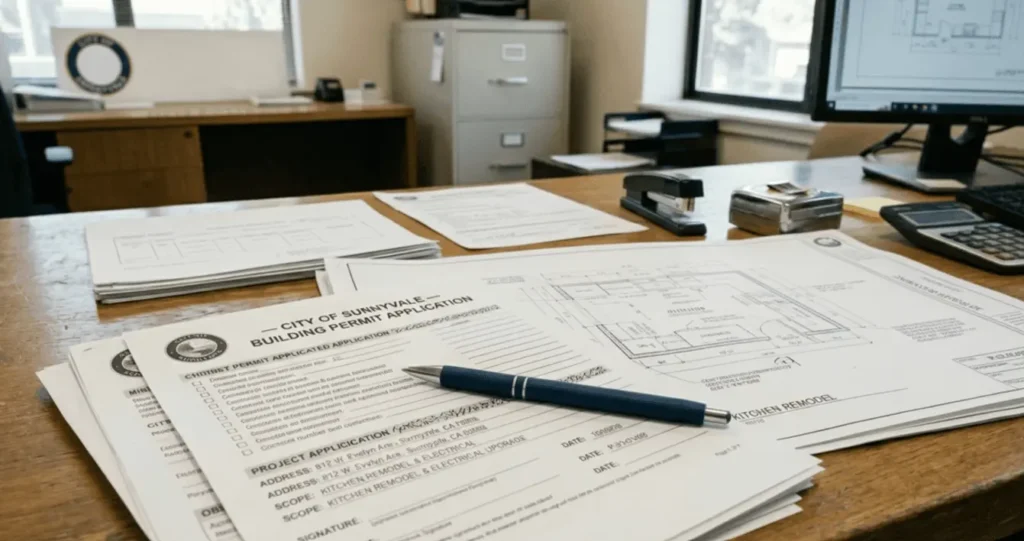
Permits are one of those topics homeowners either ignore completely or stress over unnecessarily. The truth sits somewhere in the middle and in Sunnyvale, California, knowing exactly when a permit is required can be the difference between a smooth remodel and a costly legal headache down the road.
Whether you’re refreshing your cabinets, relocating your sink, or gutting the entire kitchen down to the studs, this guide covers every permit scenario you’re likely to encounter during a Kitchen Remodeling project in Sunnyvale. We’ll also break down costs, timelines, what happens if you skip permits, and how to navigate the City of Sunnyvale’s permitting process without losing your mind.
The Short Answer: It Depends on What You’re Doing
Not every kitchen update triggers a permit requirement in Sunnyvale. The City of Sunnyvale’s Building Division follows California Building Code (CBC) standards with local amendments, and the permit threshold is tied to the nature of the work not just the dollar amount spent.
Here’s the quick breakdown:
- No permit needed: Cosmetic updates like painting, replacing cabinet doors, swapping out light fixtures for same-capacity units, or installing a new faucet in the same location
- Permit required: Structural changes, electrical panel or circuit upgrades, plumbing relocation, gas line work, HVAC modifications, and anything involving walls
The moment your remodel touches a system electrical, plumbing, mechanical, or structural you’re in permit territory. That’s true whether you’re hiring a contractor or doing the work yourself.
What Specifically Requires a Permit for a Kitchen Remodel in Sunnyvale?
Electrical Work
Any electrical work beyond replacing a like-for-like fixture requires a permit in Sunnyvale. This includes:
- Adding new circuits (common when upgrading to a double oven or induction range)
- Relocating outlets or adding GFCI-protected outlets (required by code near sinks and countertops)
- Upgrading your electrical panel to support new appliance loads
- Installing under-cabinet lighting connected to new wiring
- Any work involving the main service panel
California’s Title 24 energy code also kicks in for certain electrical upgrades, which may require lighting to meet specific efficiency standards.
Plumbing Work
Plumbing permits are required any time you:
- Move the sink to a new location
- Relocate or add a dishwasher connection
- Add or relocate a pot filler
- Run new water supply lines
- Modify drain lines or vent stacks
- Install a garbage disposal (if new wiring is involved)
Simply replacing a faucet or swapping out a sink in the same location with the same drain configuration typically does not require a permit. But the moment pipes move, a permit is needed.
Gas Line Work
This one has zero gray area. Any modification to gas lines extending a line for a new range, capping an existing connection, or relocating a gas stub requires both a plumbing/mechanical permit and an inspection. Gas work in California must also be performed by a licensed contractor. This is non-negotiable.
Structural and Framing Changes
Removing or modifying a wall to open up your kitchen to an adjacent living or dining area is one of the most popular remodeling decisions in Sunnyvale and one of the most permit-intensive. If the wall is load-bearing, a structural engineer’s stamp is typically required before the permit is issued. Even non-load-bearing wall removal requires a permit in most cases.
Other structural triggers include:
- Adding or enlarging windows or doors
- Cutting into the roof for a skylight or range hood vent
- Changing floor levels or subfloor structure
HVAC and Ventilation
Installing a new range hood that vents to the exterior (as opposed to a recirculating unit) requires cutting through an exterior wall or roof and connecting to new ductwork which triggers a mechanical permit. Any modification to your home’s central HVAC system in connection with a kitchen remodel also requires permits.
What Does NOT Require a Permit in Sunnyvale?
Understanding what doesn’t need a permit is just as useful as knowing what does. The following kitchen remodel work is generally permit-exempt in Sunnyvale:
| Work Type | Permit Required? |
|---|---|
| Repainting walls and ceilings | No |
| Replacing cabinet doors / drawer fronts | No |
| Installing new countertops (same footprint) | No |
| Replacing a faucet (same location) | No |
| Swapping a like-for-like light fixture | No |
| Installing a tile backsplash | No |
| Replacing flooring (no subfloor changes) | No |
| Replacing appliances (same location, same fuel type) | No |
| Moving plumbing or electrical | Yes |
| Adding new circuits | Yes |
| Removing walls | Yes |
| Gas line modifications | Yes |
Pro Tip: Even when individual tasks don’t require a permit, combining them into a full kitchen gut renovation almost always crosses the threshold. If you’re doing a comprehensive remodel, assume permits are required and plan accordingly from day one.
How Much Do Kitchen Remodel Permits Cost in Sunnyvale?

Permit fees in Sunnyvale are calculated based on the valuation of the work being performed, not a flat rate. Here’s a realistic estimate of what you can expect to pay:
| Permit Type | Estimated Fee Range |
|---|---|
| Building permit (general remodel) | $500 – $2,500 |
| Electrical permit | $150 – $600 |
| Plumbing permit | $150 – $500 |
| Mechanical permit (HVAC/range hood) | $100 – $400 |
| Plan check fee (if required) | $300 – $1,200 |
| Total estimated permit costs | $700 – $4,500+ |
For a mid-range kitchen remodel with electrical, plumbing, and structural components, budget approximately $1,500 – $3,000 for total permit fees. High-end or complex projects may run higher.
These fees are separate from and in addition to your contractor’s labor and materials costs. For a full picture of what a kitchen remodel costs in Sunnyvale, read our post on How Much Does a Kitchen Remodel Cost in Sunnyvale, CA? it covers total budget planning from every angle.
How Long Does It Take to Get a Kitchen Remodel Permit in Sunnyvale?
This is where Sunnyvale homeowners often get surprised. The City of Sunnyvale’s Building Division processes permit applications, but timelines can vary significantly depending on project complexity and current application volume.
Typical timelines :
- Simple permits (electrical or plumbing only): 1–3 weeks
- Standard kitchen remodel permit: 3–6 weeks
- Projects requiring plan check (structural work, etc.): 6–12 weeks
- Projects requiring structural engineering review: 8–14 weeks
Some straightforward permits may qualify for over-the-counter (OTC) approval, meaning they can be processed the same day or within a few business days if all documents are in order. Your contractor should know which projects qualify.
Planning Insight: The permit timeline is one of the most overlooked parts of a remodeling schedule. Factor in 4–8 weeks of permit processing time before construction begins. The total project timeline for a Kitchen Remodeling project in Sunnyvale including permitting typically runs 3 to 5 months. For a detailed timeline breakdown, see our post on the 10×10 Kitchen Remodel Cost in Sunnyvale: What to Expect.
The Permit Application Process: Step by Step
If you’re working with a licensed contractor (which is strongly recommended for any permitted work), they will typically handle the permit application on your behalf. But understanding the process helps you ask the right questions and stay on schedule.
Step 1: Prepare Your Project Documents
For a standard kitchen remodel permit, you’ll typically need:
- Site plan or floor plan showing existing and proposed layouts
- Electrical plan (if new circuits or panel work is involved)
- Plumbing plan (if pipes are being moved)
- Structural calculations or engineer’s letter (if walls are being removed)
- Contractor’s license and insurance information
Step 2: Submit Your Application
Applications can be submitted through the City of Sunnyvale’s online permitting portal or in person at the Development Services Center at 456 W. Olive Ave, Sunnyvale. Online submission is faster and allows you to track status in real time.
Step 3: Plan Review
For projects requiring plan check, a city building official will review your submitted documents for code compliance. They may issue correction comments that your contractor or designer needs to address before the permit is issued.
Step 4: Permit Issuance and Construction
Once the permit is issued, construction can begin. The permit must be posted on-site and visible during all inspections.
Step 5: Inspections
Inspections are required at specific milestones typically after rough framing, rough electrical, rough plumbing, and at final completion. Your contractor schedules these through the city. Missing an inspection can require you to open up finished walls for the inspector.
Step 6: Final Sign-Off
After passing all inspections, the city issues a final Certificate of Occupancy or closes the permit, confirming the work was completed in compliance with applicable codes.
What Happens If You Remodel Without a Permit in Sunnyvale?
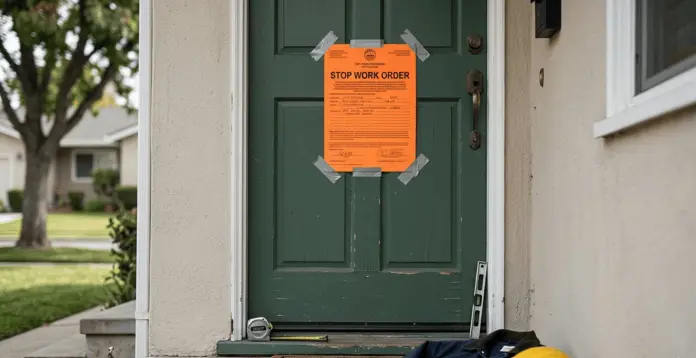
Skipping permits might feel like a shortcut, but it creates risks that can cost far more than the permits themselves:
Stop-Work Orders: If the city discovers unpermitted construction through a neighbor complaint, an insurance inspection, or a routine check they can issue a stop-work order halting your project mid-construction.
Fines and Penalties: Sunnyvale can impose fines for unpermitted work, and the penalty for after-the-fact permit applications is typically double the original permit fee.
Required Demolition: In some cases, the city may require unpermitted work to be demolished and rebuilt properly at your expense.
Homeowner’s Insurance Issues: If a fire, flood, or structural failure is traced to unpermitted work, your homeowner’s insurance policy may deny the claim.
Real Estate Complications: When you sell your home, a title search or buyer’s inspection can reveal unpermitted work. This can kill a sale, require mandatory disclosure, or force you to obtain after-the-fact permits (retroactive permitting) a more expensive and complicated process than doing it right from the start.
Liability for Injuries: If unpermitted electrical or structural work contributes to an injury, you may face personal liability.
The message is simple: permits exist to protect you, your family, and future buyers of your home. For any significant Home Remodeling project, they’re not optional.
Do Permits Apply to Bathroom and ADU Projects Too?
Absolutely. The same permit requirements that apply to kitchens extend across your entire home. Bathroom Remodeling projects involving plumbing, electrical, or ventilation changes all require permits in Sunnyvale. A full bathroom gut renovation moving the toilet, adding a double vanity, or installing a new shower will typically require building, plumbing, and electrical permits.
ADU Remodeling projects carry even more complex permit requirements, often involving zoning review, utility connections, and title report considerations in addition to standard building permits. If you’re converting a garage or adding a detached ADU on your Sunnyvale property, work with a contractor who has specific ADU permitting experience in this jurisdiction.
Homeowners in santa clara face nearly identical permit requirements through the City of Santa Clara’s Building Inspection Division, and the same general principles apply across both cities.
Tips for a Smooth Permit Process in Sunnyvale
Here are practical steps that help keep your permitting process on track:
- Hire a contractor who knows Sunnyvale’s permit process. Local experience matters. A contractor who has pulled permits in Sunnyvale before knows exactly what documentation to prepare and how to avoid common plan-check rejections.
- Don’t start construction before the permit is issued. It sounds obvious, but some contractors will push to start “prep work” before permits arrive. Any work that requires inspection must not be completed before the inspector sees it.
- Keep your permit documents accessible on-site. The permit placard must be posted at the job site during construction. Inspectors won’t conduct an inspection without it.
- Schedule inspections proactively. Don’t wait until you need the inspection to request it. Schedule with the city as soon as rough work is complete to avoid construction delays.
- Communicate scope changes to your contractor immediately. If you decide mid-project to move the sink or knock down a wall that wasn’t in the original plan, the permit scope must be amended. Scope creep without permit updates is a common source of compliance problems.
- Understand what the City of Sunnyvale’s Development Services portal offers. You can apply online, check permit status, and schedule inspections digitally which speeds up the process considerably compared to in-person visits.
For broader context on how permits fit into the total cost and planning of your project, the Kitchen Remodel Cost Breakdown: Where Every Dollar Goes in Sunnyvale post is a detailed resource worth reading before you finalize your budget.
According to the National Association of Home Builders (NAHB), permitted remodeling work consistently delivers higher resale values and fewer legal complications at time of sale making the upfront permit investment worthwhile in virtually every scenario.
The California Contractors State License Board (CSLB) also advises homeowners to always verify that their contractor holds an active license before signing any remodeling contract, as unlicensed work is one of the leading causes of unpermitted construction disputes in California.
Frequently Asked Questions
Q: Do I need a permit to replace kitchen cabinets in Sunnyvale?
Replacing cabinet doors, drawer fronts, or even full cabinet boxes in the same footprint typically does not require a permit in Sunnyvale, as long as no electrical or plumbing systems are being modified in the process. If new cabinet installation involves moving outlets or adding under-cabinet lighting on new circuits, a permit is required for that electrical work.
Q: Can I pull my own permit for a kitchen remodel in Sunnyvale?
Yes, homeowners can pull permits for work on their own primary residence in California. However, all work must still comply with applicable codes and pass inspections. For complex projects involving structural, electrical, or plumbing work, hiring a licensed contractor who pulls the permit on your behalf is strongly advisable.
Q: What happens if I buy a house with unpermitted kitchen work in Sunnyvale?
You inherit the liability for unpermitted work when you buy a property. You can apply for retroactive permits, but the city may require opening walls, bringing all systems up to current code, and paying double permit fees. A thorough home inspection and permit history check before purchasing is essential.
Q: Does replacing a kitchen floor require a permit in Sunnyvale?
Simply replacing flooring tile, LVP, hardwood on the existing subfloor typically does not require a permit. If the subfloor itself is being modified, reinforced, or if floor levels are being changed, a permit may be required.
Q: How do I check if a previous kitchen remodel was permitted in Sunnyvale?
You can search permit history for any property through the City of Sunnyvale’s public permit records portal, or contact the Building Division directly. Your title company can also search permit records as part of a real estate transaction.
Q: Does a kitchen remodel require a permit if I’m just repainting and updating hardware?
No. Cosmetic updates painting, replacing cabinet hardware, installing a new backsplash tile, or swapping faucets in the same location do not require permits in Sunnyvale. Permits are triggered by work that affects the structural, electrical, plumbing, or mechanical systems of the home.
Q: Are permit requirements the same in Santa Clara as in Sunnyvale?
The general framework is similar both cities follow California Building Code but each has its own local amendments, fee schedules, and review timelines. Homeowners in santa clara should contact the City of Santa Clara Building Inspection Division directly for project-specific guidance.
Work With a Contractor Who Gets It Right the First Time
Navigating permits is genuinely one of the more complicated parts of a Kitchen Remodeling project in Sunnyvale. When it’s handled properly, it’s almost invisible your contractor prepares the documents, submits the application, schedules inspections, and your project moves forward cleanly. When it’s handled poorly or ignored entirely, it creates delays, fines, and problems that follow your property for years.
At Prime Remodel Sunnyvale, we manage the entire permit process for our clients across Kitchen Remodeling, Home Remodeling, Bathroom Remodeling, and ADU Remodeling projects in Sunnyvale and santa clara. We know the city’s requirements, we have established relationships with the Building Division, and we build permit timelines into every project schedule from day one.
If you’re planning a kitchen remodel and want to understand exactly what permits your project will require and what the full process looks like reach out for a free consultation. We’ll give you a straight answer, a realistic timeline, and a detailed plan before any work begins.